
Talk to ForestsUnderstandthe Trees
 Meet gAIa
“gAIa voices our collective intelligence on trees
Our knowledge of trees is vast—but scattered. Some data sits behind expensive licences. Some is outdated. And for many trees, it simply doesn't exist. This is especially true on private land, which can make up a large share of a city's canopy. For urban greening teams, that creates a blind spot. And when local experts move on, much of their practical knowledge goes with them.
Trees are as essential as roads or bridges. They clean the air, cool our streets, reduce flood risk, and make neighbourhoods healthier and more liveable. They are also living landmarks—hosts to biodiversity and holders of collective memory. Yet because these benefits are hard to see and measure, trees too often appear only as costs.
gAIa is an AI companion for trees, built for everyone—from school children to senior arborists. It helps people learn, contribute observations, and take care actions in both public and private spaces. It also brings together data, local knowledge, and simulations, so users can explore how trees might grow and what benefits they may provide over time.


Learn care. Feel connection. See impact.
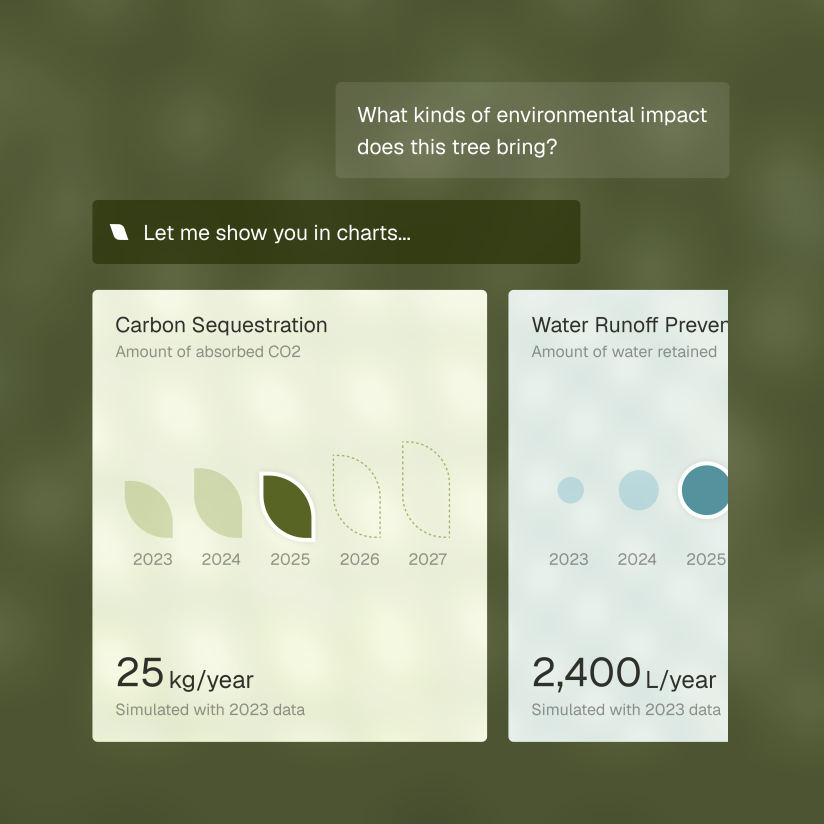
Impact you can see
Good for urban planners, greening initiatives, and municipal officers.
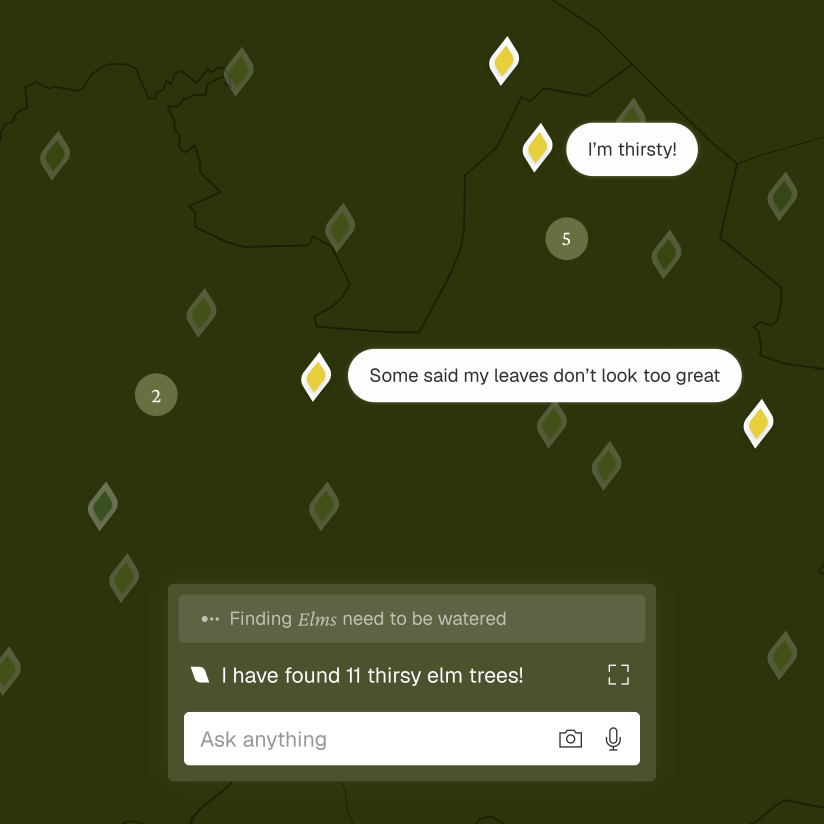
Care with guidance
Good for arborists, municipal teams, and citizens who want practical, timely tree-care guidance.
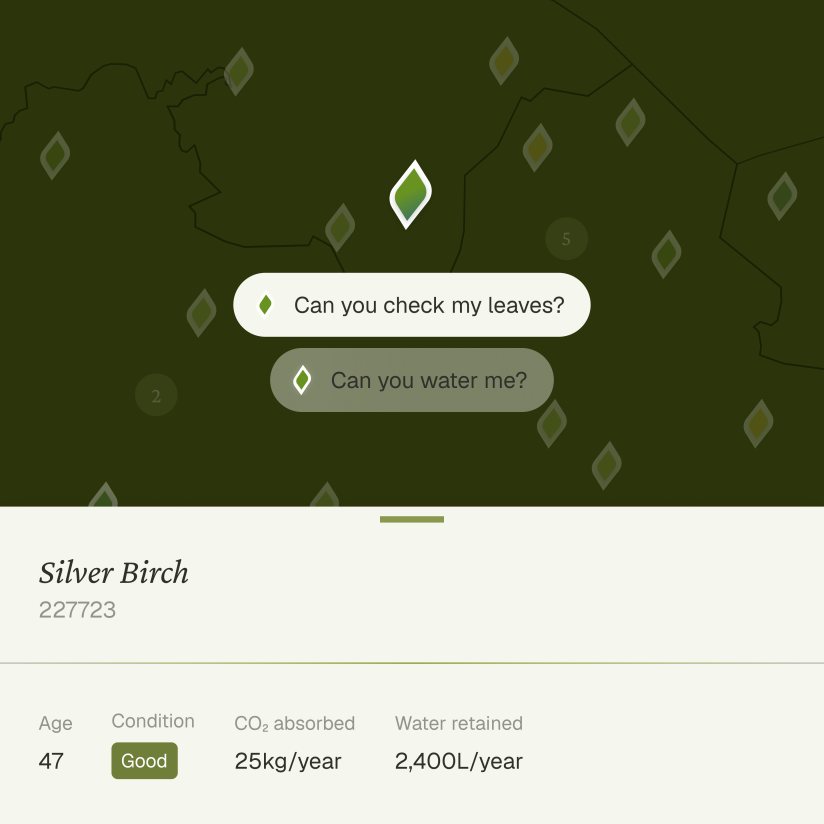
Nature with context
Good for citizen science campaigns, participatory education in schools, and preserving the natural heritage of monumental trees and parks.
How It Works
Ask a Question
Start a conversation with gAIa about any tree or forest in your area.
Get Real Insights
Receive data-driven answers powered by scientific models and real measurements.
Take Action
Use insights to make informed decisions about tree care and urban planning.
Behind the Scenes
Discover the technology and principles that power gAIa's insights

Transparent by Design
Every answer is powered by real tree data, scientific models, and open city databases.
Backed by Advanced Simulations
Forecasts of carbon, biodiversity, cooling, and water are generated through a validated agent-based simulation engine called GUS.
Learn about GUSDriven by Knowledge Graphs
Context comes from linked ecological data and scientific research, making each conversation accurate and grounded.
Supported By



gAIa grows stronger with every contribution
Citizens, researchers, and cities all play a role in shaping a living map that makes nature's value visible and actionable.
Join us in giving voice to the trees.